Saturday, September 29, 2007


For other Jewish regiments, see Jewish legion (disambiguation).
The Jewish Brigade was a fighting unit in the British Army composed of volunteers from the British Mandate of Palestine that fought in World War II on the side of the Allies against the Nazi Axis Powers.

Background
Despite the efforts by the British to enlist an equal number of Jews and Arabs into the Palestine Regiment, three times more Jews volunteered than Arabs. As a result, on August 6, 1942, three Palestinian Jew battalions and one Palestinian Arab battalion were formed. At this time, the Regiment was principally involved in guard duties in Egypt and North Africa. The British also wanted to undermine efforts of Hajj Amin al-Husayni who successfully drummed up Arab support of the Axis Powers against the Allies.

Palestine Regiment
After early reports of the Nazi atrocities of the Holocaust were made public by the Allied powers, the Prime Minister Winston Churchill sent a personal telegram to the US President Franklin D. Roosevelt suggesting that "the Jews... of all races have the right to strike at the Germans as a recognizable body." The president replied five days later saying: "I perceive no objection..."
After much hesitation, on July 3, 1944, the British government consented to the establishment of a Jewish Brigade with hand-picked Jewish and also non-Jewish senior officers. On September 20, 1944, an official communique by the War Office announced the formation of the Jewish Brigade Group of the British Army. The Zionist flag was officially approved as its standard. It included more than 5,000 Jewish volunteers from Palestine organized into three infantry battalions and several supporting units.
The contemporary newspapers dismissed it as a "token" (The New York Times on page 12) and "five years late" (The Manchester Guardian).

Jewish Brigade Formation of the Jewish Brigade
Under the command of Brigadier Ernest Benjamin, the Jewish Brigade fought against the Germans in Italy from March 1945 until the end of the war in May 1945, then it was stationed in Tarvisio, near the border triangle of Italy, Yugoslavia, and Austria. There it played a key role in the Berihah's efforts to help Jews escape Europe for Palestine, a role many of its members would continue after the Brigade disbanded. Among its projects was the education and care of the Selvino children.
In July 1945, the Brigade moved to Belgium and the Netherlands. The Jewish Brigade Group was disbanded in the summer of 1946.

Battles and Berihah
Out of some 30,000 Jewish volunteers from Palestine who served in the British Army during WWII, more than 700 were killed during active duty. Some of the Jewish Brigade members subsequently became key participants of the new State of Israel's Israel Defense Force.

Resources

Jewish Legion
Special Interrogation Group (SIG)

Friday, September 28, 2007

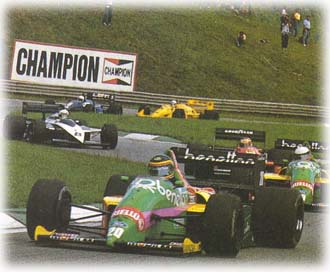
Teo Fabi
Teodorico Fabi, better known as Teo Fabi (born March 9, 1955) is an Italian former racing driver.

Teo Fabi Complete Formula One results
(key) (Races in bold indicate pole position)

Thursday, September 27, 2007

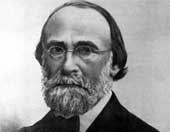
Agostino Depretis
Agostino Depretis (January 31, 1813 – July 29, 1887) was an Italian statesman.

Wednesday, September 26, 2007

Bruce Cameron
This article is about the priest. For the guitarist, see Bruce Cameron (guitarist).
The Most Reverend Bruce Cameron (born 1941) is a Scottish priest, who became Primus of the Scottish Episcopal Church on 1 November 2000. On 6 November 2005 he announced his intention to step down from being the Primus at the end of April 2006, prior to his retirement as Bishop of Aberdeen and Orkney at the end of June 2006.
He was succeeded as Primus by the Most Rev Idris Jones on 18 May 2006.

Biography
Cameron was born in 1941, in Glasgow, Scotland. He was subsequently educated at Edinburgh Theological College between 1961 and 1964. Upon graduation he became a Deacon and a Priest in 1965.
He first served as curate at St. Michael's and All Angels Church, Helensburgh, Argyll and Bute, from 1964 to 1967. He was next posted to another curacy at Holy Cross Church, Edinburgh 1967-1970.
Cameron's quick advance in the church led him to become chaplain at St Mary's Cathedral 1971-1975. During this period he was the Diocesan Youth Chaplain. His first Rectorship was at St. Mary's Church, Dalmahoy 1975-1982. He was also Team Rector, Livingston Ecumenical Team Ministry from 1982 to 1988 and Rector of St. John's Church in Perth from1988 to 1992. Cameron was Consecrated Bishop of Aberdeen and Orkney in 1992 and Elected Primus on November 1st 2000.
He Retired in June of 2006
He remains married to Elaine (nee Gingles), who he wedded in 1974. The couple have two sons [1]

Tuesday, September 25, 2007


The following tables compare general and technical information for a number of relational database management systems. Please see the individual products' articles for further information. This article is not all-inclusive or necessarily up-to-date. Unless otherwise specified in footnotes, comparisons are based on the stable versions without any add-ons, extensions or external programs.

General information
The operating systems the RDBMSes can run on.
Note (1): Open source databases listed as UNIX-compatible will likely compile and run under z/OS's built-in UNIX System Services (USS) subsystem. Most databases listed as Linux-compatible can run alongside z/OS on the same server using Linux on zSeries.
Note (2): The database availability depends on Java Virtual Machine not on the operating system

Fundamental features
Information about what tables and views (other than basic ones) are supported natively.
Note (5): Server provides tempdb, which can be used for public and private (for the session) temp tables.[2]
Note (6): Materialized views can be emulated using stored procedures and triggers.[3].
Note (7): Materialized views can be emulated with stored procedures and triggers using PL/pgSQL, PL/Perl, PL/Python, or other procedural languages.[4].

Tables and views
Information about what indices (other than basic B-/B+ tree indices) are supported natively.
Note (8): Can be implemented by indexing a computed column or by using an indexed view. [5]
Note (9): Can be implemented by using an indexed view. [6]
Note (17): InnoDB automatically generates adaptive hash index entries as needed.
Note (10): A PostgreSQL functional index can be used to reverse the order of a field.
Note (11): PostgreSQL will likely support on-disk bitmap indexes in 8.3. Version 8.2 supports a related technique known as "in-memory bitmap scans".
Note (15): Can be implemented using Function-based Indexes in Oracle 8i and higher.
Note (16): The users need to use a function from freeAdhocUDF library or similar. [7]
Note (17): Can be implemented using Function-based Indexes in Valentina.

Comparison of relational database management systems Indices

Database capabilities
Information about what other objects are supported natively.
Note (12): Both function and procedure refer to internal routines written in SQL and/or procedural language like PL/SQL. External routine refers to the one written in the host languages, such as C, Java, Cobol, etc. "Stored procedure" is a commonly used term for these routine types. However, its definition varies between different database vendors. Note (13): In Derby, users code functions and procedures in Java.

Other objects
Information about what partitioning methods are supported natively.
Note (14): PostgreSQL 8.1 provides partitioning support through check constraints. Range, List and Hash methods can be emulated with PL/pgSQL or other procedural languages. [8]

Databases vs Schemas (terminology)

List of relational database management systems
Comparison of truly relational database management systems
Comparison of object-relational database management systems

Monday, September 24, 2007

Saint Emygdius Legend
His hagiography was written probably by a monk of Frankish origin in the eleventh century, after the rediscovery of the saint's relics, which had been conserved in a Roman sarcophagus.

Gallery

Sunday, September 23, 2007


Edmund Dulac (born Edmond Dulac 1882-1953) was a French book illustrator prominent during the so called "Golden Age of Illustration" (the first quarter or so of the twentieth century).

Later life
Illustration to The Snow Queen
The Garden of Paradise - The Fairy of the Garden's garment
Illustration to The Nightingale
Illustration to The Princess and the Pea
Illustration to The Garden of Paradise
Edmund Dulac Illustration to The Garden of Paradise
Edmund Dulac Illustration to The Little Mermaid
Illustration to The Emperor's New Clothes